
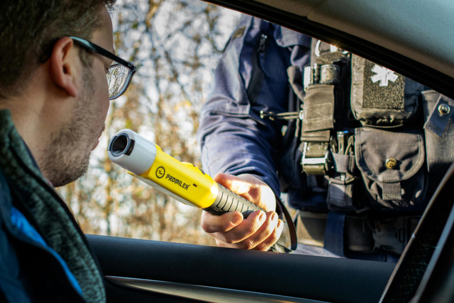
Seeing flashing lights ahead on a weekend night in Walnut Creek and Contra Costa County can make any driver tense, especially if you had even one drink with dinner. Traffic slows, cones appear, and you realize you are heading straight into a line of cars with officers walking from window to window. In that moment, most people worry less about legal theory and more about a simple question: what exactly am I supposed to do right now?
Drivers across Walnut Creek, Martinez, Richmond, Pittsburg, and nearby communities run into DUI checkpoints on busy nights, holidays, and special enforcement campaigns. Many have never been stopped before and have no idea what they must hand over. Others have already been arrested at a DUI checkpoint in Contra Costa and are now trying to figure out if that stop was even legal in the first place.
California and federal courts have created rules that law enforcement must follow when they run sobriety checkpoints, and not every checkpoint operation satisfies those rules. A Walnut Creek criminal defense lawyer like Thomas Daly Law, A Professional Corporation looks closely at how a specific DUI checkpoint Contra Costa operation was planned and carried out. Understanding those procedures and your rights at each step can make the difference between feeling powerless and making informed choices.
How DUI Checkpoints Work In Contra Costa County
A DUI checkpoint is a pre-planned operation where officers stop vehicles according to a set pattern to look for signs of impaired driving. Instead of pulling someone over because of swerving, speeding, or another visible violation, law enforcement sets up a fixed location and directs cars through a controlled area.
In Contra Costa County, these checkpoints often appear on main routes that see heavy weekend traffic or near areas with bars and restaurants, especially on Friday or Saturday nights, around holidays, and during state or federal grant-funded campaigns that focus on DUI.
Agencies use checkpoints because they believe visible enforcement deters impaired driving and allows officers to screen many drivers in a short period of time. Local departments and the California Highway Patrol may publicize that a checkpoint will occur in a certain city or area, even if they do not share the exact location in advance.
In Contra Costa, this means a DUI checkpoint should not be a loosely organized group of officers flagging down cars wherever they choose. It should be an operation based on written plans, supervisory approval, and neutral criteria that are decided in advance. When Thomas Daly Law, A Professional Corporation reviews a DUI checkpoint Contra Costa case, these structural details are often the first place to look for weaknesses in the stop itself.
Legal Rules That Keep DUI Checkpoints Constitutional
Because sobriety checkpoints involve stopping drivers without individualized suspicion, courts require that they follow clear constitutional limits under the Fourth Amendment. The main goal is to prevent arbitrary enforcement and protect drivers’ rights.
Several safeguards typically apply:
- Neutral vehicle selection – Officers must stop cars according to a predetermined formula, such as every vehicle or every third vehicle. They cannot choose drivers based on appearance or instinct.
- Supervisory oversight – Supervisors, not field officers, must decide the time, location, and stopping pattern in advance.
- Reasonable location – The site should relate to roadway safety, often in areas associated with prior DUI activity.
- Visibility and safety – Cones, signs, lighting, and clearly identifiable officers must make the checkpoint obvious and safe.
- Minimal detention – Drivers who show no signs of impairment should be delayed only briefly.
When defending a DUI checkpoint in Contra Costa, attorneys often request operational plans, briefing documents, and post-operation reports. If officers deviated from the written plan or extended stops without cause, the legality of the checkpoint can be challenged. Walnut Creek DUI defense attorneys regularly compare what was supposed to happen with what actually occurred on the roadside.
What To Expect When You Approach A DUI Checkpoint In Contra Costa
From a driver’s perspective, the process typically unfolds in stages. First, you see warning signs, flashing lights, and cones directing vehicles into fewer lanes. Traffic slows, and officers motion cars forward in a controlled sequence.
When you reach the front of the line, an officer approaches your window and usually requests:
- Driver’s license
- Vehicle registration
- Proof of insurance
While you gather these documents, the officer observes your speech, coordination, and any odor of alcohol. You may also be asked where you are coming from or whether you have been drinking.
If no signs of impairment are observed, you are generally allowed to proceed after a short delay. Courts expect that sober drivers at a DUI checkpoint in Contra Costa will not experience prolonged detention.
If the officer believes there are indicators of impairment, you may be directed to a secondary area for further evaluation. This can involve additional questions, field sobriety tests, or a preliminary breath test. At that point, understanding your rights becomes critical, and if an arrest occurs, Walnut Creek DUI defense attorneys later examine whether officers stayed within constitutional limits.
Your Rights At A DUI Checkpoint: What You Must And Do Not Have To Do
Many drivers assume they must comply with every request at a checkpoint. In reality, the law distinguishes between mandatory obligations and voluntary investigative steps.
You are required to:
- Stop when directed
- Follow traffic safety instructions
- Provide license, registration, and proof of insurance
You are not generally required to answer detailed questions about where you were earlier in the evening or how much you drank. Drivers may respectfully decline to answer investigatory questions.
For adults over 21 who are not on DUI probation:
- Field sobriety tests are typically voluntary.
- The roadside preliminary alcohol screening (PAS) breath test is often voluntary before arrest.
California’s implied consent law usually applies after a lawful arrest, at which point refusing a chemical test can trigger separate DMV penalties.
In reviewing a DUI checkpoint in Contra Costa, Walnut Creek DUI defense attorneys look closely at whether officers clearly distinguished between requests and commands. If a voluntary test were presented as mandatory, that issue could become part of a defense strategy.
Common DUI Checkpoint Mistakes Police Make In Contra Costa
Even structured operations can contain flaws. A checkpoint may face legal challenges if planning, execution, or detention procedures fail to meet constitutional standards.
Common issues include:
- Improper site selection without documented safety justification
- Failure to follow neutral stopping patterns
- Selective enforcement based on subjective factors
- Excessive detention without clear signs of impairment
- Inadequate lighting or visibility
If officers deviate from the approved plan, that deviation can undermine the legality of the stop. In some cases, courts may suppress evidence obtained from an unlawful DUI checkpoint in Contra Costa.
Walnut Creek DUI defense attorneys often obtain operational records and compare them with body camera footage, patrol car video, and arrest reports. Discrepancies between documentation and reality can significantly affect the outcome of a case.
What Happens After A DUI Checkpoint Arrest In Contra Costa County
An arrest at a checkpoint typically triggers two parallel processes: a DMV administrative case and a criminal court case.
DMV Proceedings
After an arrest, drivers usually have a short window to request a hearing to challenge a potential license suspension. Failing to act promptly can result in automatic suspension. Checkpoint legality issues may also be raised in this setting.
Criminal Court Proceedings
The court case begins with an arraignment, often in Martinez, Richmond, or Pittsburg, depending on the arrest location. During the pretrial phase, defense counsel may file motions challenging the legality of the DUI checkpoint in Contra Costa and the admissibility of evidence.
Checkpoint defects can influence negotiations and charging decisions. Skilled Walnut Creek DUI defense attorneys evaluate both tracks early to protect driving privileges and develop a coordinated strategy.
How A Walnut Creek DUI Lawyer Evaluates A Checkpoint Case
Defending a DUI checkpoint Contra Costa case involves more than reading a single arrest report. A thorough defense often starts by gathering the full set of documents related to the checkpoint itself. This can include the operational plan, any written guidelines given to officers, logs showing how many vehicles were stopped and when, and any reports summarizing the purpose and results of the operation.
A lawyer then compares those documents to what happened in your specific stop. Questions include whether officers adhered to the neutral stopping pattern, whether the checkpoint was clearly marked, and how long you were detained before any decision to send you to a secondary area or arrest you.
Beyond the checkpoint structure, a defense evaluation looks at the details of your interaction with officers. That includes what you were told about tests, whether you were given clear choices, and how any statements you made were obtained. For example, if officers presented a voluntary field sobriety test or preliminary breath test as if it were mandatory for all drivers, that could raise questions about whether consent was truly voluntary.
Modern defense strategies often combine a close review of checkpoint paperwork with any available video from patrol cars or body cameras and careful scrutiny of chemical test procedures. When used together, these elements can reveal a picture of the stop that differs significantly from the quick impression a driver had while sitting at the cones. That deeper picture is where many viable defenses are found.
Talk To A Walnut Creek Lawyer About Your DUI Checkpoint Stop
DUI checkpoints in Contra Costa County can be intimidating, but they are not beyond legal scrutiny. From how the location was chosen, to how cars were selected, to what officers said and did at your window, each step must follow rules that balance public safety and individual rights. When those rules are not followed, the law can give drivers ways to challenge the stop and the evidence that flowed from it.
If you were stopped or arrested at a DUI checkpoint drivers frequently encounter in Walnut Creek, Martinez, Richmond, Pittsburg, or nearby communities, you do not have to guess whether the checkpoint was lawful or face the system alone. Thomas Daly Law, A Professional Corporation can review the checkpoint plan, the reports, and your own account to identify possible defenses and guide you through both the DMV process and the criminal courts.
To talk about your specific situation in a confidential, one-on-one consultation, contact us online or call (925) 208-4801.